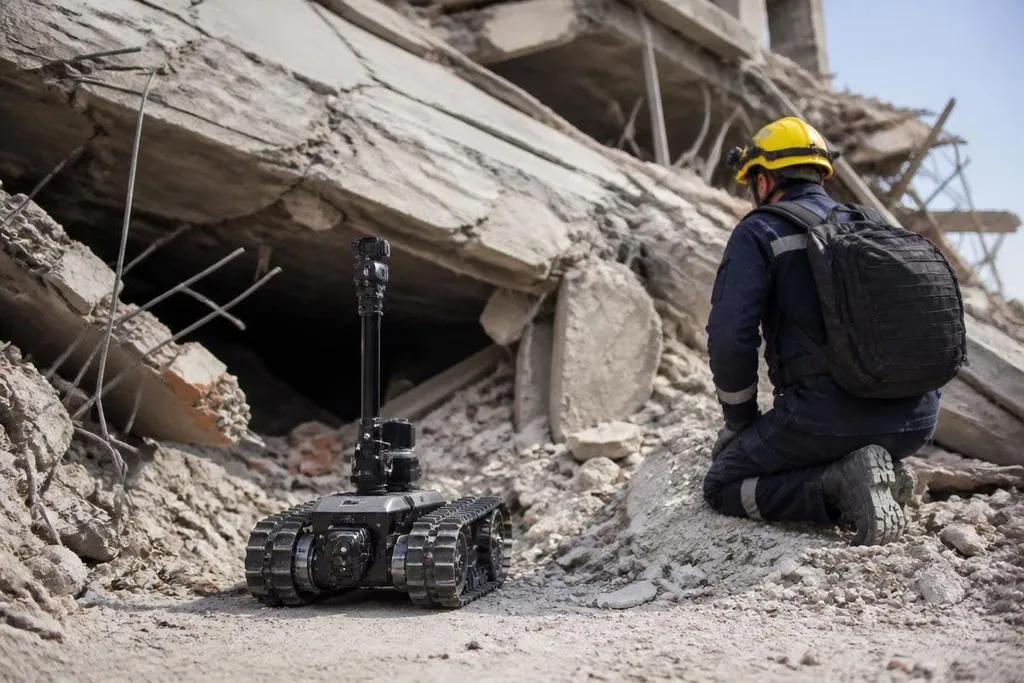
A collapsed building can hide a person behind concrete, dust, and twisted metal. Robots could search those spaces with cameras, microphones, thermal sensors, and LiDAR before a rescuer enters.
- Small ground robots can inspect gaps too narrow for people.
- Drones can scan roofs and open areas soon after a collapse.
- Rescue teams still need to confirm every possible survivor location.
Where robots help first
The first job is to build a safe picture of the site.
A tracked robot can move across broken floors and send video from places where loose material may fall. A drone can inspect upper floors, roads, and roof sections without adding weight to a damaged structure.
That remote view gives the rescue team more information before they choose a route. The robot may find a hand, a face, movement, or an open space large enough for a person. It can also mark blocked passages so people spend less time checking the same area.
Small robots matter most in tight spaces. A machine with a camera and light can enter a pipe, gap, or narrow passage that a person cannot reach safely. A larger robot may carry a microphone, gas sensor, or radio link, but its weight can make movement harder on unstable ground.
How a robot detects a person
Video is useful in clear areas, but dust and darkness can block it. Thermal cameras may show body heat through some smoke or low light, though concrete and other materials can limit what the sensor sees.
Sound gives the robot another way to search. A microphone can record tapping, speech, or movement, then send the audio to a rescuer for review. The robot should mark where the sound came from, because a loose pipe or running machine can also make noise.
LiDAR measures distance with laser pulses. It can build a map of walls, gaps, and floor edges even when normal cameras struggle. That map helps the team plan a route and spot changes in the structure, but it cannot confirm that a person is behind a solid slab.
No single sensor can settle the search. A useful system combines the robot's position, camera view, heat readings, sound, and map so a person can check the same spot with more context.
What slows the search
Rubble is hard on machines. Tracks can slip on dust, wheels can jam against cables, and a radio link can weaken behind concrete. A robot that loses contact with its operator may stop in a place where recovery takes more time than the first inspection.
Battery life also shapes the work. A drone may need to return before the team has checked every roof section, and a ground robot may need a battery change near the entrance. The team needs a clear record of the search area so a second machine can continue without starting again.
Robots can also misread signs. A warm pipe may look like a person to a thermal camera. A moving sheet of plastic may confuse video software. A sound may travel through a wall and make the source seem closer than it is.
That is why the robot should mark possible signs, not declare that it has found someone. Human rescuers must confirm the location before cutting concrete or sending people inside.
A rescue robot’s value depends on the signs it detects and the action that follows. Rescue robot field reports can tie that record to the machine, sensor setup, test site, and date, giving the field checklist a firm place to start.
A practical field checklist
Before using a robot at a damaged site, the team should check:
- Access: Can the machine reach the search area without crossing unstable material?
- Control: Does the radio link work behind walls and below ground?
- Sensors: Does the payload include the camera, light, audio, or heat sensor needed there?
- Power: Is there a charged spare battery and a safe place to change it?
- Mapping: Can the team record searched paths and possible survivor locations?
- Recovery: Can rescuers retrieve the robot if a track breaks or the link drops?
These checks turn a robot from a remote camera into a usable search tool. They also show where a machine does not fit: a drone may suit an open roof, but a tracked robot may suit a narrow basement passage.
The best near-term use is shared work. Robots search the risky first metres, collect video and sensor data, and pass a map to the people deciding what happens next. I'd use them to widen the search and lower exposure, not to replace rescue teams.
The open test is simple: can a robot find a real person in dust, darkness, broken concrete, and weak radio coverage before its battery or connection runs out?